


CIC Exam Preparation Material with New CIC Dumps Questions
CIC 2025 Training With 174 QA's
NEW QUESTION # 85
What inflammatory reaction may occur in the eye after cataract surgery due to a breach in disinfection and sterilization of intraocular surgical instruments?
- A. Toxic Posterior Segment Syndrome
- B. Bacterial conjunctivitis
- C. Toxic Anterior Segment Syndrome
- D. Endophthalmitis
Answer: C
Explanation:
The correct answer is C, "Toxic Anterior Segment Syndrome," as this is the inflammatory reaction that may occur in the eye after cataract surgery due to a breach in disinfection and sterilization of intraocular surgical instruments. According to the Certification Board of Infection Control and Epidemiology (CBIC) guidelines, Toxic Anterior Segment Syndrome (TASS) is a sterile, acute inflammatory reaction that can result from contaminants introduced during intraocular surgery, such as endotoxins, residues from improper cleaning, or chemical agents left on surgical instruments due to inadequate disinfection or sterilization processes (CBIC Practice Analysis, 2022, Domain III: Infection Prevention and Control, Competency 3.3 - Ensure safe reprocessing of medical equipment). TASS typically presents within 12-48 hours post-surgery with symptoms like pain, redness, and anterior chamber inflammation, and it is distinct from infectious causes because it is not microbial in origin. A breach in reprocessing protocols, such as failure to remove detergents or improper sterilization, is a known risk factor, making it highly relevant to infection prevention efforts in surgical settings.
Option A (endophthalmitis) is an infectious inflammation of the internal eye structures, often caused by bacterial or fungal contamination, which can also result from poor sterilization but is distinguished from TASS by its infectious nature and longer onset (days to weeks). Option B (bacterial conjunctivitis) affects the conjunctiva and is typically a surface infection unrelated to intraocular surgery or sterilization breaches of surgical instruments. Option D (toxic posterior segment syndrome) is not a recognized clinical entity in the context of cataract surgery; inflammation in the posterior segment is more commonly associated with infectious endophthalmitis or other conditions, not specifically linked to reprocessing failures.
The focus on TASS aligns with CBIC's emphasis on ensuring safe reprocessing to prevent adverse outcomes in surgical patients, highlighting the need for rigorous infection control measures (CBIC Practice Analysis,
2022, Domain III: Infection Prevention and Control, Competency 3.5 - Evaluate the environment for infection risks). This is supported by CDC and American Academy of Ophthalmology guidelines, which identify TASS as a preventable complication linked to reprocessing errors (CDC Guidelines for Disinfection and Sterilization, 2019; AAO TASS Task Force Report, 2017).
References: CBIC Practice Analysis, 2022, Domain III: Infection Prevention and Control, Competencies 3.3 - Ensure safe reprocessing of medical equipment, 3.5 - Evaluate the environment for infection risks. CDC Guidelines for Disinfection and Sterilization in Healthcare Facilities, 2019. AAO TASS Task Force Report,
2017.
NEW QUESTION # 86
What is the MOST effective way an infection preventionist can assess readiness of emergency preparedness plans for an influx of patients with an emerging viral hemorrhagic fever?
- A. Coordinate with hospital-based emergency management professionals and other incident command stakeholders to conduct a tabletop exercise or full-scale drill.
- B. Collaborate with hospital stakeholders to assess the current availability of backup supplies of both staff and personal protective equipment
- C. Conduct regular rounding in the Emergency Department providing education and reviewing policies and procedures with frontline staff
- D. Meet frequently with emergency management professionals in the hospital and local public health authority.
Answer: A
Explanation:
The most effective way to assess emergency preparedness for an influx of patients with viral hemorrhagic fever (VHF) is through tabletop exercises or full-scale drills. These exercises simulate real-life scenarios, allowing hospitals to test protocols, identify weaknesses, and improve response efforts.
Why the Other Options Are Incorrect?
* A. Meet frequently with emergency management professionals - While important, meetings alone do not provide hands-on testing of preparedness.
* B. Conduct regular rounding in the Emergency Department - Rounding helps with policy compliance, but does not test the entire emergency response plan.
* D. Collaborate to assess the availability of supplies and PPE - This is one component of preparedness but does not evaluate the facility's response in real-time.
CBIC Infection Control Reference
APIC recommends full-scale emergency drills as the gold standard for assessing preparedness for emerging infectious diseases.
NEW QUESTION # 87
Which performance improvement model should the infection preventionist use to aid in the evaluation of the infection control plan?
- A. Six Sigma
- B. Plan, Do, Study, Act
- C. Root Cause Analysis
- D. Failure mode and effects analysis
Answer: B
Explanation:
The Plan, Do, Study, Act (PDSA) model is a widely used performance improvement tool in infection prevention. It focuses on continuous quality improvement through planning, implementing, analyzing data, and making adjustments. This model aligns with infection control program evaluations and The Joint Commission's infection prevention and control standards.
Why the Other Options Are Incorrect?
* A. Six Sigma - A data-driven process improvement method but not as commonly used in infection control as PDSA.
* B. Failure Mode and Effects Analysis (FMEA) - Used to identify risks before implementation, rather than ongoing evaluation.
* D. Root Cause Analysis (RCA) - Used to analyze failures after they occur, rather than guiding continuous improvement.
CBIC Infection Control Reference
The PDSA cycle is a recognized model for evaluating and improving infection control plans.
NEW QUESTION # 88
Which of the following strategies is MOST effective in reducing surgical site infections (SSI) in orthopedic procedures?
- A. Use of sterile adhesive wound dressings for 10 days postoperatively.
- B. Administration of prophylactic antibiotics postoperatively for 48 hours.
- C. Routine intraoperative wound irrigation with povidone-iodine.
- D. Perioperative normothermia maintenance.
Answer: D
Explanation:
* Perioperative normothermia maintenance reduces SSI rates by improving immune function and tissue perfusion.
* Routine wound irrigation (B) has no strong evidence supporting SSI prevention.
* Prolonged antibiotic use (C) increases antibiotic resistance without added benefit.
* Extended use of wound dressings (D) does not reduce SSI rates.
CBIC Infection Control References:
* APIC Text, "SSI Prevention in Surgery," Chapter 12.
NEW QUESTION # 89
A family, including an infant of 8 months, is going on a vacation to Europe. An infection preventionist would recommend:
- A. The infant should not travel until at least 12 months of age.
- B. Exposure to rabies should be avoided.
- C. Family members should be vaccinated for yellow fever.
- D. Family immunization records should be reviewed by their provider.
Answer: D
Explanation:
When advising a family, including an 8-month-old infant, planning a vacation to Europe, an infection preventionist (IP) must consider travel-related health risks and vaccination recommendations tailored to the destination and age-specific guidelines. The Certification Board of Infection Control and Epidemiology (CBIC) emphasizes the "Education and Training" domain, which includes providing evidence-based advice to prevent infections, aligning with the Centers for Disease Control and Prevention (CDC) and World Health Organization (WHO) travel health recommendations.
Option D, "Family immunization records should be reviewed by their provider," is the most appropriate recommendation. Europe, as a region, includes countries with varying health risks, but it is generally considered a low-risk area for many vaccine-preventable diseases compared to tropical regions. The CDC's
"Travelers' Health" guidelines (2023) recommend that all travelers, including infants, have their immunization status reviewed by a healthcare provider prior to travel to ensure compliance with routine vaccinations (e.g., measles, mumps, rubella [MMR], diphtheria, tetanus, pertussis [DTaP], and polio) and to assess any destination-specific needs. For an 8-month-old, the review would confirm that the infant has received age-appropriate vaccines (e.g., the first doses of DTaP, Hib, PCV, and IPV, typically starting at 2 months) and is on schedule for the 6- and 12-month doses. This step ensures the family's overall protection and identifies any gaps, making it a proactive and universally applicable recommendation.
Option A, "Exposure to rabies should be avoided," is a general travel safety tip applicable to any destination where rabies is endemic (e.g., parts of Eastern Europe or rural areas with wildlife). However, rabies risk in most European countries is low, and pre-exposure vaccination is not routinely recommended for travelers unless specific high-risk activities (e.g., handling bats) are planned. The CDC advises avoiding animal bites rather than vaccinating unless indicated, making this less specific and urgent than a records review. Option B,
"Family members should be vaccinated for yellow fever," is incorrect. Yellow fever is not endemic in Europe, and vaccination is not required or recommended for travel to any European country. The WHO International Health Regulations (2005) and CDC list yellow fever vaccination as mandatory only for travelers from or to certain African and South American regions, rendering this irrelevant. Option C, "The infant should not travel until at least 12 months of age," lacks a clear evidence base. While some vaccines (e.g., MMR) are typically given at 12 months, the 8-month-old can travel safely if up-to-date on age-appropriate immunizations. The CDC allows travel for infants as young as 6 weeks with medical clearance, and delaying travel to 12 months is not a standard recommendation unless specific risks (e.g., disease outbreaks) are present, which are not indicated here.
The CBIC Practice Analysis (2022) and CDC Travelers' Health resources prioritize pre-travel health assessments, including immunization reviews, as the foundation for safe travel. Option D ensures a comprehensive approach tailored to the family's needs, making it the best recommendation for a trip to Europe.
References:
* CBIC Practice Analysis, 2022.
* CDC Travelers' Health, 2023.
* WHO International Health Regulations, 2005.
The correct answer is B, "Blood pressure cuff," as this item is appropriately cleaned with a disinfectant that is an approved hospital disinfectant with no tuberculocidal claim. According to the Certification Board of Infection Control and Epidemiology (CBIC) guidelines, the selection of disinfectants for medical equipment depends on the item's classification and intended use. The Environmental Protection Agency (EPA) categorizes hospital disinfectants based on their efficacy against specific pathogens, with tuberculocidal claims indicating effectiveness against Mycobacterium tuberculosis, a highly resistant organism. A disinfectant without a tuberculocidal claim is suitable for non-critical items-those that contact intact skin but not mucous membranes or sterile tissues-such as blood pressure cuffs, which require only low-level disinfection to reduce bacterial and viral loads (CBIC Practice Analysis, 2022, Domain III: Infection Prevention and Control, Competency 3.4 - Implement environmental cleaning and disinfection protocols).
This aligns with CDC guidelines, which designate low-level disinfectants as adequate for non-critical surfaces.
Option A (laryngoscope blades) is incorrect because laryngoscope blades are semi-critical items that contact mucous membranes (e.g., the oropharynx) and require high-level disinfection or sterilization, which necessitates a disinfectant with tuberculocidal activity to ensure efficacy against a broader spectrum of pathogens, including mycobacteria. Option C (respiratory therapy equipment) is also incorrect, as this equipment (e.g., ventilators or nebulizers) is semi-critical or critical depending on its use, requiring at least intermediate- to high-level disinfection, which exceeds the capability of a non-tuberculocidal disinfectant.
Option D (ultrasound probe) is inappropriate if used on intact skin (non-critical, allowing low-level disinfection), but many ultrasound probes contact mucous membranes or sterile sites, necessitating high-level disinfection with a tuberculocidal agent, making this option unreliable without context.
The selection of a blood pressure cuff aligns with CBIC's emphasis on using appropriate disinfectants based on the Spaulding classification to prevent healthcare-associated infections (HAIs) (CBIC Practice Analysis,
2022, Domain III: Infection Prevention and Control, Competency 3.5 - Evaluate the environment for infection risks). This is supported by EPA and CDC guidelines, which guide disinfectant use based on item risk levels (EPA Disinfectant Product List, 2023; CDC Disinfection Guidelines, 2019).
References: CBIC Practice Analysis, 2022, Domain III: Infection Prevention and Control, Competencies 3.4 - Implement environmental cleaning and disinfection protocols, 3.5 - Evaluate the environment for infection risks. EPA Disinfectant Product List, 2023. CDC Guidelines for Disinfection and Sterilization in Healthcare Facilities, 2019.
NEW QUESTION # 90
An outbreak of carbapenem-resistant Klebsiella pneumoniae is linked to duodenoscopes. What is the infection preventionist's PRIORITY intervention?
- A. Implement immediate enhanced reprocessing procedures and audit compliance.
- B. Conduct whole-genome sequencing of outbreak isolates.
- C. Discontinue the use of duodenoscopes until further notice.
- D. Perform targeted patient screening for Klebsiella pneumoniae.
Answer: A
Explanation:
* The CDC and FDA have identified duodenoscopes as high-risk devices due to inadequate reprocessing, leading to MDRO transmission.
* The first priority is enhancing reprocessing protocols and ensuring strict compliance with manufacturer instructions.
CBIC Infection Control References:
* APIC Text, "Endoscope Reprocessing and Infection Risk," Chapter 10.
NEW QUESTION # 91
What question would be appropriate for an infection preventionist to ask when reviewing the discussion section of an original article?
- A. Is the study question important, appropriate, and stated clearly?
- B. Could alternative explanations account for the observed results?
- C. Are criteria used to measure the exposure and the outcome explicit?
- D. Was the correct sample size and analysis method chosen?
Answer: B
Explanation:
When reviewing the discussion section of an original article, an infection preventionist must focus on critically evaluating the interpretation of the study findings, their relevance to infection control, and their implications for practice. The discussion section typically addresses the meaning of the results, compares them to existing literature, and considers limitations or alternative interpretations. The appropriate question should align with the purpose of this section and reflect the infection preventionist's need to assess the validity and applicability of the research. Let's analyze each option:
* A. Was the correct sample size and analysis method chosen?: This question pertains to the methodology section of a research article, where the study design, sample size, and statistical methods are detailed.
While these elements are critical for assessing the study's rigor, they are not the primary focus of the discussion section, which interprets results rather than re-evaluating the study design. An infection preventionist might ask this during a review of the methods section, but it is less relevant here.
* B. Could alternative explanations account for the observed results?: The discussion section often explores whether the findings can be explained by factors other than the hypothesized cause, such as confounding variables, bias, or chance. This question is highly appropriate for an infection preventionist, as it encourages a critical assessment of whether the results truly support infection control interventions or if other factors (e.g., environmental conditions, patient factors) might be responsible.
This aligns with CBIC's emphasis on evidence-based practice, where understanding the robustness of conclusions is key to applying research to infection prevention strategies.
* C. Is the study question important, appropriate, and stated clearly?: This question relates to the introduction or background section of an article, where the research question and its significance are established. While important for overall study evaluation, it is not specific to the discussion section, which focuses on interpreting results rather than revisiting the initial question. An infection preventionist might consider this earlier in the review process, but it does not fit the context of the discussion section.
* D. Are criteria used to measure the exposure and the outcome explicit?: This question is relevant to the methods section, where the definitions and measurement tools for exposures (e.g., a specific intervention) and outcomes (e.g., infection rates) are described. The discussion section may reference these criteria but focuses more on their implications rather than their clarity. This makes it less appropriate for the discussion section specifically.
The discussion section is where authors synthesize their findings, address limitations, and consider alternative explanations, making option B the most fitting. For an infection preventionist, evaluating alternative explanations is crucial to ensure that recommended practices (e.g., hand hygiene protocols or sterilization techniques) are based on solid evidence and not confounded by unaddressed variables. This critical thinking is consistent with CBIC's focus on applying research to improve infection control outcomes.
References:
* CBIC Infection Prevention and Control (IPC) Core Competency Model (updated 2023), Domain I:
Identification of Infectious Disease Processes, which emphasizes critical evaluation of research evidence.
* CBIC Examination Content Outline, Domain V: Management and Communication, which includes assessing the validity of research findings for infection control decision-making.
NEW QUESTION # 92
Which of the following operating suite design features is LEAST important for the prevention of infection?
- A. Control of traffic and traffic flow patterns
- B. Positive pressure air handling
- C. Placement of sinks for surgical scrubs
- D. Type of floor material
Answer: D
Explanation:
The correct answer is A, "Type of floor material," as it is the least important operating suite design feature for the prevention of infection compared to the other options. According to the Certification Board of Infection Control and Epidemiology (CBIC) guidelines, the design of operating suites plays a critical role in infection prevention, particularly for surgical site infections (SSIs). While the type of floor material (e.g., vinyl, tile, or epoxy) can affect ease of cleaning and durability, its impact on infection prevention is secondary to other design elements that directly influence air quality, hygiene practices, and personnel movement (CBIC Practice Analysis, 2022, Domain III: Infection Prevention and Control, Competency 3.5 - Evaluate the environment for infection risks). Modern flooring materials are generally designed to be non-porous and easily disinfected, mitigating their role as a primary infection risk factor when proper cleaning protocols are followed.
Option B (positive pressure air handling) is highly important because it prevents the influx of contaminated air into the operating suite, reducing the risk of airborne pathogens, including those causing SSIs. This is a standard feature in operating rooms to maintain a sterile environment (AORN Guidelines for Perioperative Practice, 2023). Option C (placement of sinks for surgical scrubs) is critical for ensuring that surgical staff can perform effective hand and forearm antisepsis, a key step in preventing SSIs by reducing microbial load before surgery. Option D (control of traffic and traffic flow patterns) is essential to minimize the introduction of contaminants from outside the operating suite, as excessive or uncontrolled movement can increase the risk of airborne and contact transmission (CDC Guidelines for Environmental Infection Control in Healthcare Facilities, 2019).
The relative unimportance of floor material type stems from the fact that infection prevention relies more on consistent cleaning practices and the aforementioned design features, which directly address pathogen transmission routes. This aligns with CBIC's focus on evaluating environmental risks based on their direct impact on infection control (CBIC Practice Analysis, 2022, Domain III: Infection Prevention and Control, Competency 3.4 - Implement environmental cleaning and disinfection protocols).
References: CBIC Practice Analysis, 2022, Domain III: Infection Prevention and Control, Competencies 3.4 - Implement environmental cleaning and disinfection protocols, 3.5 - Evaluate the environment for infection risks. AORN Guidelines for Perioperative Practice, 2023. CDC Guidelines for Environmental Infection Control in Healthcare Facilities, 2019.
NEW QUESTION # 93
What should an infection preventionist prioritize when designing education programs?
- A. Learning and behavioral science theories
- B. Prior healthcare experiences
- C. Departmental budgets
- D. Marketing research
Answer: A
Explanation:
The correct answer is D, "Learning and behavioral science theories," as this is what an infection preventionist (IP) should prioritize when designing education programs. According to the Certification Board of Infection Control and Epidemiology (CBIC) guidelines, effective education programs in infection prevention and control are grounded in evidence-based learning theories and behavioral science principles. These theories, such as adult learning theory (andragogy), social learning theory, and the health belief model, provide a framework for understanding how individuals acquire knowledge, develop skills, and adopt behaviors (CBIC Practice Analysis, 2022, Domain IV: Education and Research, Competency 4.1 - Develop and implement educational programs). Prioritizing these theories ensures that educational content is tailored to the learners' needs, enhances engagement, and promotes sustained behavior change-such as adherence to hand hygiene or proper use of personal protective equipment (PPE)-which are critical for reducing healthcare-associated infections (HAIs).
Option A (marketing research) is more relevant to commercial strategies and audience targeting outside the healthcare education context, making it less applicable to the IP's role in designing clinical education programs. Option B (departmental budgets) is an important logistical consideration for resource allocation, but it is secondary to the design process; financial constraints should influence implementation rather than the foundational design based on learning principles. Option C (prior healthcare experiences) can inform the customization of content by identifying learners' backgrounds, but it is not the primary priority; it should be assessed within the context of applying learning and behavioral theories to address those experiences effectively.
The focus on learning and behavioral science theories aligns with CBIC's emphasis on developing and evaluating educational programs that drive measurable improvements in infection control practices (CBIC Practice Analysis, 2022, Domain IV: Education and Research, Competency 4.2 - Evaluate the effectiveness of educational programs). By prioritizing these theories, the IP can create programs that are scientifically sound, learner-centered, and impactful, ultimately enhancing patient and staff safety.
References: CBIC Practice Analysis, 2022, Domain IV: Education and Research, Competencies 4.1 - Develop and implement educational programs, 4.2 - Evaluate the effectiveness of educational programs.
NEW QUESTION # 94
Therapeutic antimicrobial agents should be used when
- A. the infecting agent is unknown
- B. the patient symptoms suggest likely pathogens.
- C. Following identification of the pathogen and sensitives.
- D. the patient's illness warrants treatment prior to culture results
Answer: C
Explanation:
Therapeutic antimicrobial agentsshould ideally bepathogen-directedto minimizeresistance, side effects, and treatment failure. Once thecausative pathogen and its antimicrobial susceptibilities are known, the mostnarrow-spectrum, effectiveagent should be used.
Why the Other Options Are Incorrect?
* A. The infecting agent is unknown- Empiric therapy may be necessary initially, but definitive therapy should be based on pathogen identification.
* B. The patient's illness warrants treatment prior to culture results- This applies toempiric therapy
, but not todefinitive antimicrobial selection.
* C. The patient's symptoms suggest likely pathogens- Clinical presentation guidesempiric treatment
, butdefinitive therapy should follow culture and susceptibility testing.
CBIC Infection Control Reference
APIC emphasizes theimportance of selecting antimicrobials based on pathogen identification and susceptibility testingto preventantimicrobial resistance.
NEW QUESTION # 95
Which of the following is included in an effective respiratory hygiene program in healthcare facilities?
- A. Mask availability at building entrance and reception
- B. Temperature monitoring devices at clinical unit entrance
- C. Separate entrance for symptomatic patients and visitors
- D. Community educational brochures campaign
Answer: A
Explanation:
An effective respiratory hygiene program in healthcare facilities aims to reduce the transmission of respiratory pathogens, such as influenza, COVID-19, and other droplet- or airborne infectious agents, by promoting practices that minimize the spread from infected individuals. The Certification Board of Infection Control and Epidemiology (CBIC) emphasizes the importance of such programs within the "Prevention and Control of Infectious Diseases" domain, aligning with guidelines from the Centers for Disease Control and Prevention (CDC). The CDC's "Guideline for Isolation Precautions" (2007) and its respiratory hygiene/cough etiquette recommendations outline key components, including source control, education, and environmental measures to protect patients, visitors, and healthcare workers.
Option B, "Mask availability at building entrance and reception," is a core element of an effective respiratory hygiene program. Providing masks at entry points ensures that symptomatic individuals can cover their mouth and nose, reducing the dispersal of respiratory droplets. This practice, often referred to as source control, is a primary strategy to interrupt transmission, especially in high-traffic areas like entrances and receptions. The CDC recommends that healthcare facilities offer masks or tissues and no-touch receptacles for disposal as part of respiratory hygiene, making this a practical and essential inclusion.
Option A, "Community educational brochures campaign," is a valuable adjunct to raise awareness among the public about respiratory hygiene (e.g., covering coughs, hand washing). However, it is an external strategy rather than a direct component of the facility's internal program, which focuses on immediate action within the healthcare setting. Option C, "Separate entrance for symptomatic patients and visitors," can enhance infection control by segregating potentially infectious individuals, but it is not a universal requirement and depends on facility resources and design. The CDC suggests this as an optional measure during outbreaks, not a standard element of every respiratory hygiene program. Option D, "Temperature monitoring devices at clinical unit entrance," is a useful screening tool to identify febrile individuals, which may indicate infection.
However, it is a surveillance measure rather than a core hygiene practice, and its effectiveness is limited without accompanying interventions like masking.
The CBIC Practice Analysis (2022) and CDC guidelines prioritize actionable, facility-based interventions like mask provision to mitigate transmission risks. The availability of masks at key entry points directly supports the goal of respiratory hygiene by enabling immediate source control, making Option B the most appropriate answer.
References:
* CBIC Practice Analysis, 2022.
* CDC Guideline for Isolation Precautions: Preventing Transmission of Infectious Agents in Healthcare Settings, 2007.
NEW QUESTION # 96
Which of the following infectious diseases is associated with environmental fungi?
- A. Campylobacter
- B. Listeriosis
- C. Hantavirus
- D. Mucormycosis
Answer: D
Explanation:
The correct answer is C, "Mucormycosis," as it is the infectious disease associated with environmental fungi.
According to the Certification Board of Infection Control and Epidemiology (CBIC) guidelines, mucormycosis is caused by fungi belonging to the order Mucorales, which are commonly found in the environment, including soil, decaying organic matter, and contaminated water. These fungi can become opportunistic pathogens, particularly in immunocompromised individuals, leading to severe infections such as rhinocerebral, pulmonary, or cutaneous mucormycosis (CBIC Practice Analysis, 2022, Domain I:
Identification of Infectious Disease Processes, Competency 1.1 - Identify infectious disease processes).
Environmental exposure, such as inhalation of fungal spores or contact with contaminated materials, is a primary mode of transmission, making it directly linked to environmental fungi.
Option A (Listeriosis) is caused by the bacterium Listeria monocytogenes, typically associated with contaminated food products (e.g., unpasteurized dairy or deli meats) rather than environmental fungi. Option B (Hantavirus) is a viral infection transmitted through contact with rodent excreta, not fungi, and is linked to environmental reservoirs like rodent-infested areas. Option D (Campylobacter) is a bacterial infection caused by Campylobacter species, often associated with undercooked poultry or contaminated water, and is not related to fungi.
The association of mucormycosis with environmental fungi underscores the importance of infection prevention strategies, such as controlling environmental contamination and protecting vulnerable patients, which aligns with CBIC's focus on identifying and mitigating risks from infectious agents in healthcare settings (CBIC Practice Analysis, 2022, Domain III: Infection Prevention and Control, Competency 3.2 - Implement measures to prevent transmission of infectious agents). This knowledge is critical for infection preventionists to guide environmental cleaning and patient care protocols.
References: CBIC Practice Analysis, 2022, Domain I: Identification of Infectious Disease Processes, Competency 1.1 - Identify infectious disease processes; Domain III: Infection Prevention and Control, Competency 3.2 - Implement measures to prevent transmission of infectious agents.
NEW QUESTION # 97
Surgical site infection (SSI) data for the previous quarter reveal the following numbers. The surgeon with the highest infection rate is Doctor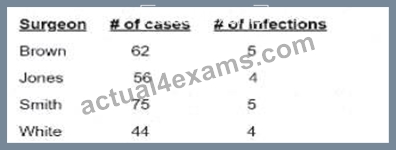
- A. Smith
- B. Jones.
- C. White
- D. Brown
Answer: C
Explanation:
To determinewhich surgeon has the highest surgical site infection (SSI) rate, use the following formula:
A screenshot of a report AI-generated content may be incorrect.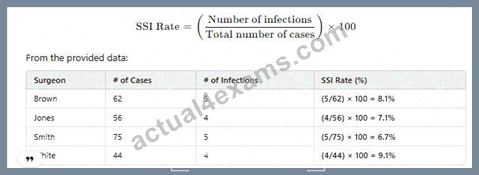
SinceDr. White has the highest SSI rate at 9.1%, the correct answer isD. White.
CBIC Infection Control Reference
SSI rates are calculated usinginfection count per total proceduresand reported aspercentage values.
NEW QUESTION # 98
Ongoing education for the Infection Preventionist (IP) is MOST important because
- A. it is necessary to maintain a competitive edge.
- B. self-directed learning is not a major force for the adult learner.
- C. the healthcare environment is fast-paced with frequent changes.
- D. motivation to change comes from the Management Team.
Answer: C
Explanation:
Ongoing education for Infection Preventionists (IPs) is essential due to therapidly evolving healthcare landscapeand emergence of new infectious diseases, regulations, and technologies.
* From theAPIC Text:
"Professional development is essential to keeping the infection preventionist up to date with the latest knowledge, skills, and strategies for preventing infections."
* TheAPIC/JCR Workbookalso notes:
"Because information related to emerging infectious diseases... changes rapidly... IPs should actively review information for updates and guidance." References:
APIC Text, 4th Edition, Chapter 2 - Competency and Certification
APIC/JCR Workbook, 4th Edition, Chapter 3 - Education and Training
NEW QUESTION # 99
Which of the following statements describes the MOST important consideration of an infection preventionist when assessing the effectiveness of an infection control action plan?
- A. Monitor and validate the related outcome and process measures.
- B. Develop a timeline and assign responsibilities for the stated action.
- C. Re-evaluate the action plan every three years.
- D. Update the plan before the risk assessment is completed.
Answer: A
Explanation:
Assessing the effectiveness of an infection control action plan is a critical responsibility of an infection preventionist (IP) to ensure that interventions reduce healthcare-associated infections (HAIs) and improve patient safety. The Certification Board of Infection Control and Epidemiology (CBIC) highlights this process within the "Surveillance and Epidemiologic Investigation" and "Performance Improvement" domains, emphasizing the need for ongoing evaluation and data-driven decision-making. The Centers for Disease Control and Prevention (CDC) and other guidelines stress that the ultimate goal of an action plan is to achieve measurable outcomes, such as reduced infection rates, which requires systematic monitoring and validation.
Option D, "Monitor and validate the related outcome and process measures," is the most important consideration. Outcome measures (e.g., infection rates, morbidity, or mortality) indicate whether the action plan has successfully reduced the targeted infection risk, while process measures (e.g., compliance with hand hygiene or proper catheter insertion techniques) assess whether the implemented actions are being performed correctly. Monitoring involves continuous data collection and analysis, while validation ensures the data's accuracy and relevance to the plan's objectives. The CBIC Practice Analysis (2022) underscores that effective infection control relies on evaluating both outcomes (e.g., decreased central line-associated bloodstream infections) and processes (e.g., adherence to aseptic protocols), making this a dynamic and essential step. The CDC's "Compendium of Strategies to Prevent HAIs" (2016) further supports this by recommending regular surveillance and feedback as key to assessing intervention success.
Option A, "Re-evaluate the action plan every three years," suggests a periodic review, which is a good practice for long-term planning but is insufficient as the most important consideration. Infection control requires more frequent assessment (e.g., quarterly or annually) to respond to emerging risks or outbreaks, making this less critical than ongoing monitoring. Option B, "Update the plan before the risk assessment is completed," is illogical and counterproductive. Updating a plan without a completed risk assessment lacks evidence-based grounding, undermining the plan's effectiveness and contradicting the CBIC's emphasis on data-driven interventions. Option C, "Develop a timeline and assign responsibilities for the stated action," is an important initial step in implementing an action plan, ensuring structure and accountability. However, it is a preparatory activity rather than the most critical factor in assessing effectiveness, which hinges on post- implementation evaluation.
The CBIC Practice Analysis (2022) and CDC guidelines prioritize outcome and process monitoring as the cornerstone of infection control effectiveness, enabling IPs to adjust strategies based on real-time evidence.
Thus, Option D represents the most important consideration for assessing an infection control action plan's success.
References:
* CBIC Practice Analysis, 2022.
* CDC Compendium of Strategies to Prevent Healthcare-Associated Infections, 2016.
NEW QUESTION # 100
An infection preventionist (IP) observes an increase in primary bloodstream infections in patients admitted through the Emergency Department. Poor technique is suspected when peripheral intravenous (IV) catheters are inserted. The IP should FIRST stratify infections by:
- A. Site of insertion: hand, forearm, or antecubital fossa.
- B. Type of dressing used: gauze, CHG impregnated sponge, or transparent.
- C. Location of IV insertion: pre-hospital, Emergency Department, or in-patient unit.
- D. Type of skin preparation used for the IV site: alcohol, CHG/alcohol, or iodophor.
Answer: C
Explanation:
When an infection preventionist (IP) identifies an increase in primary bloodstream infections (BSIs) associated with peripheral intravenous (IV) catheter insertion, the initial step in outbreak investigation and process improvement is to stratify the data to identify potential sources or patterns of infection. According to the Certification Board of Infection Control and Epidemiology (CBIC), the "Surveillance and Epidemiologic Investigation" domain emphasizes the importance of systematically analyzing data to pinpoint contributing factors, such as location, technique, or equipment use, in healthcare-associated infections (HAIs). The question specifies poor technique as a suspected cause, and the first step should focus on contextual factors that could influence technique variability.
Option A, stratifying infections by the location of IV insertion (pre-hospital, Emergency Department, or in- patient unit), is the most logical first step. Different settings may involve varying levels of training, staffing, time pressure, or adherence to aseptic technique, all of which can impact infection rates. For example, pre- hospital settings (e.g., ambulance services) may have less controlled environments or less experienced personnel compared to in-patient units, potentially leading to technique inconsistencies. The CDC's Guidelines for the Prevention of Intravascular Catheter-Related Infections (2017) recommend evaluating the context of catheter insertion as a critical initial step in investigating BSIs, making this a priority for the IP to identify where the issue is most prevalent.
Option B, stratifying by the type of dressing used (gauze, CHG impregnated sponge, or transparent), is important but should follow initial location-based analysis. Dressings play a role in maintaining catheter site integrity and preventing infection, but their impact is secondary to the insertion technique itself. Option C, stratifying by the site of insertion (hand, forearm, or antecubital fossa), is also relevant, as anatomical sites differ in infection risk (e.g., the hand may be more prone to contamination), but this is a more specific factor to explore after broader contextual data is assessed. Option D, stratifying by the type of skin preparation used (alcohol, CHG/alcohol, or iodophor), addresses antiseptic efficacy, which is a key component of technique.
However, without first understanding where the insertions occur, it's premature to focus on skin preparation alone, as technique issues may stem from systemic factors across locations.
The CBIC Practice Analysis (2022) supports a stepwise approach to HAI investigation, starting with broad stratification (e.g., by location) to guide subsequent detailed analysis (e.g., technique-specific factors). This aligns with the CDC's hierarchical approach to infection prevention, where contextual data collection precedes granular process evaluation. Therefore, the IP should first stratify by location to establish a baseline for further investigation.
References:
* CBIC Practice Analysis, 2022.
* CDC Guidelines for the Prevention of Intravascular Catheter-Related Infections, 2017.
NEW QUESTION # 101
A 36-year-old female presents to the Emergency Department with a petechial rash, meningitis, and cardiac arrest. During the resuscitation, a phlebotomist sustained a needlestick injury. The next day, blood cultures reveal Neisseria meningitidis. The exposure management for the phlebotomist is:
- A. Work furlough from day ten to day 21 after exposure.
- B. A tuberculin skin test now and in ten weeks.
- C. A review of the phlebotomist's hepatitis B vaccine status.
- D. Prophylactic rifampin plus isoniazid.
Answer: A
Explanation:
The scenario involves a needlestick injury sustained by a phlebotomist during the resuscitation of a patient diagnosed with Neisseria meningitidis infection, characterized by a petechial rash, meningitis, and cardiac arrest. Neisseria meningitidis is a gram-negative diplococcus that can cause meningococcal disease, including meningitis and septicemia, and is transmitted through direct contact with respiratory secretions or, in rare cases, blood exposure. The exposure management for the phlebotomist must align with infection control guidelines, such as those from the Certification Board of Infection Control and Epidemiology (CBIC) and the CDC, to prevent potential infection. Let's evaluate each option:
* A. Prophylactic rifampin plus isoniazid: Prophylactic antibiotics are recommended for close contacts of individuals with meningococcal disease to prevent secondary cases. Rifampin is a standard prophylactic agent for Neisseria meningitidis exposure, typically administered as a 2-day course (e.g., 600 mg every
12 hours for adults). Isoniazid, however, is used for tuberculosis (TB) prophylaxis and is not indicated for meningococcal disease. Combining rifampin with isoniazid is incorrect, as it reflects a confusion with TB management rather than meningococcal exposure. This option is not appropriate.
* B. A tuberculin skin test now and in ten weeks: A tuberculin skin test (TST) or interferon-gamma release assay (IGRA) is used to screen for latent tuberculosis infection, with a follow-up test at 8-10 weeks to detect conversion after potential TB exposure. Neisseria meningitidis is not related to TB, and a needlestick injury from a meningococcal patient does not warrant TB testing. This option is irrelevant to the scenario and not the correct exposure management.
* C. Work furlough from day ten to day 21 after exposure: Neisseria meningitidis has an incubation period of 2-10 days, with a maximum of about 14 days in rare cases. The CDC and WHO recommend that healthcare workers exposed to meningococcal disease via needlestick or mucosal exposure be monitored for signs of infection (e.g., fever, rash) and, if symptomatic, isolated and treated.
Additionally, a work restriction or furlough from day 10 to day 21 after exposure is advised to cover the potential incubation period, especially if prophylaxis is declined or contraindicated. This allows time to observe for symptoms and prevents transmission to vulnerable patients. This is a standard infection control measure and the most appropriate initial management step pending prophylaxis decision.
* D. A review of the phlebotomist's hepatitis B vaccine status: Reviewing hepatitis B vaccine status is a critical step following a needlestick injury, as hepatitis B can be transmitted through blood exposure.
However, this applies to bloodborne pathogens (e.g., HBV, HCV, HIV) and is not specific to Neisseria meningitidis, which is primarily a respiratory or mucosal pathogen. While hepatitis B management (e.
g., post-exposure prophylaxis with hepatitis B immunoglobulin or vaccine booster) should be addressed as part of a comprehensive needlestick protocol, it is not the first or most relevant priority for meningococcal exposure.
The best answer is C, as the work furlough from day 10 to day 21 after exposure addresses the specific risk of meningococcal disease following a needlestick injury. This aligns with CBIC's focus on timely intervention and work restriction to prevent transmission in healthcare settings. Prophylactic antibiotics (e.g., rifampin) should also be considered, but the question asks for the exposure management, and furlough is a primary control measure. Hepatitis B and TB considerations are secondary and managed separately.
References:
* CBIC Infection Prevention and Control (IPC) Core Competency Model (updated 2023), Domain III:
Prevention and Control of Infectious Diseases, which includes protocols for managing exposure to communicable diseases like meningococcal infection.
* CBIC Examination Content Outline, Domain IV: Environment of Care, which addresses work restrictions and exposure management.
* CDC Guidelines for Meningococcal Disease Prevention and Control (2023), which recommend work furlough and monitoring for exposed healthcare workers.
NEW QUESTION # 102
When conducting a literature search which of the following study designs may provide the best evidence of a direct causal relationship between the experimental factor and the outcome?
- A. A randomized-controlled trial
- B. A case control study
- C. A descriptive study
- D. A case report
Answer: A
Explanation:
To determine the best study design for providing evidence of a direct causal relationship between an experimental factor and an outcome, it is essential to understand the strengths and limitations of each study design listed. The goal is to identify a design that minimizes bias, controls for confounding variables, and establishes a clear cause-and-effect relationship.
* A. A case report: A case report is a detailed description of a single patient or a small group of patients with a particular condition or outcome, often including the experimental factor of interest. While case reports can generate hypotheses and highlight rare occurrences, they lack a control group and are highly susceptible to bias. They do not provide evidence of causality because they are observational and anecdotal in nature. This makes them the weakest design for establishing a direct causal relationship.
* B. A descriptive study: Descriptive studies, such as cross-sectional or cohort studies, describe the characteristics or outcomes of a population without manipulating variables. These studies can identify associations between an experimental factor and an outcome, but they do not establish causality due to the absence of randomization or control over confounding variables. For example, a descriptive study might show that a certain infectionrate is higher in a group exposed to a specific factor, but it cannot prove the factor caused the infection without further evidence.
* C. A case control study: A case control study compares individuals with a specific outcome (cases) to those without (controls) to identify factors that may contribute to the outcome. This retrospective design is useful for studying rare diseases or outcomes and can suggest associations. However, it is prone to recall bias and confounding, and it cannot definitively prove causation because the exposure is not controlled or randomized. It is stronger than case reports or descriptive studies but still falls short of establishing direct causality.
* D. A randomized-controlled trial (RCT): An RCT is considered the gold standard for establishing causality in medical and scientific research. In an RCT, participants are randomly assigned to either an experimental group (exposed to the factor) or a control group (not exposed or given a placebo).
Randomization minimizes selection bias and confounding variables, while the controlled environment allows researchers to isolate the effect of the experimental factor on the outcome. The ability to compare outcomes between groups under controlled conditions provides the strongest evidence of a direct causal relationship. This aligns with the principles of evidence-based practice, which the CBIC (Certification Board of Infection Control and Epidemiology) emphasizes for infection prevention and control strategies.
Based on this analysis, the randomized-controlled trial (D) is the study design that provides the best evidence of a direct causal relationship. This conclusion is consistent with the CBIC's focus on high-quality evidence to inform infection control practices, as RCTs are prioritized in the hierarchy of evidence for establishing cause- and-effect relationships.
:
CBIC Infection Prevention and Control (IPC) Core Competency Model (updated guidelines, 2023), which emphasizes the use of high-quality evidence, including RCTs, for validating infection control interventions.
CBIC Examination Content Outline, Domain I: Identification of Infectious Disease Processes, which underscores the importance of evidence-based study designs in infection control research.
NEW QUESTION # 103
Assume the mean age of onset for patients with tuberculosis (TB) is 62 years, with one standard deviation of
5 years, and the age of onset follows a normal distribution. What is the percentage of patients expected to have the age of onset ranging from 57 to 67 years?
- A. 99%
- B. 95%
- C. 34%
- D. 68%
Answer: D
Explanation:
To determine the percentage of patients with an age of onset ranging from 57 to 67 years, we need to apply the properties of a normal distribution. In a normal distribution, the mean represents the central point, and the standard deviation defines the spread of the data. Here, the mean age of onset is 62 years, and the standard deviation is 5 years. The range of 57 to 67 years corresponds to one standard deviation below the mean (62 - 5
= 57) to one standard deviation above the mean (62 + 5 = 67).
In a normal distribution, approximately 68% of the data falls within one standard deviation of the mean (i.e., between # - # and # + #, where # is the mean and # is the standard deviation). This is a well-established statistical principle, often referred to as the 68-95-99.7 rule (or empirical rule) in statistics. Specifically, 34% of the data lies between the mean and one standard deviation above the mean, and another 34% lies between the mean and one standard deviation below the mean, totaling 68% for the range spanning one standard deviation on both sides of the mean.
Let's verify this:
* The lower bound (57 years) is exactly one standard deviation below the mean (62 - 5 = 57).
* The upper bound (67 years) is exactly one standard deviation above the mean (62 + 5 = 67).
* Thus, the range from 57 to 67 years encompasses the middle 68% of the distribution.
Option A (34%) represents the percentage of patients within one standard deviation on only one side of the mean (e.g., 62 to 67 or 57 to 62), not the full range. Option C (95%) corresponds to approximately two standard deviations from the mean (62 ± 10 years, or 52 to 72 years), which is wider than the given range.
Option D (99%) aligns with approximately three standard deviations (62 ± 15 years, or 47 to 77 years), which is even broader. Since the question specifies a range of one standard deviation on either side of the mean, the correct answer is 68%, corresponding to Option B.
In infection control, understanding the distribution of disease onset ages can help infection preventionists identify at-risk populations and allocate resources effectively, aligning with the CBIC's focus on surveillance and data analysis (CBIC Practice Analysis, 2022). While the CBIC does not directly address statistical calculations in its core documents, the application of normal distribution principles is a standard epidemiological tool endorsed in public health guidelines, which inform CBIC practices.
References:
* CBIC Practice Analysis, 2022.
* Public Health Epidemiology Guidelines, Normal Distribution and Empirical Rule (commonly accepted statistical standards).
NEW QUESTION # 104
......
Quickly and Easily Pass CBIC Exam with CIC real Dumps: https://www.actual4exams.com/CIC-valid-dump.html
CBIC CIC Certification Exam Questions: https://drive.google.com/open?id=1ummFrq2neoaFeMQP35ZGkmJ0ApEsESyl