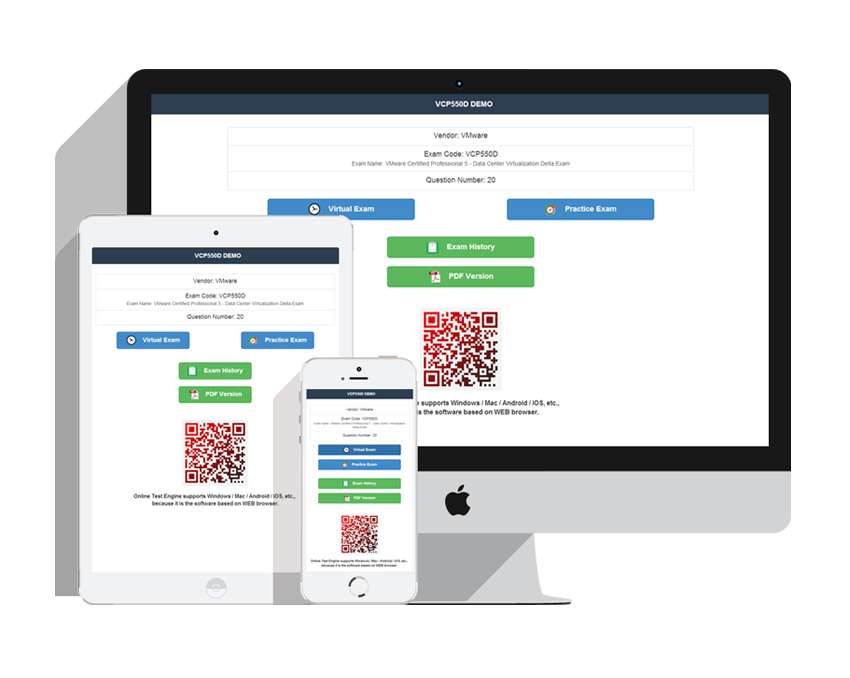
Trust is earned, so Actual4Exams hands over the evidence first. A free demo of the MuleSoft Certified Developer - Level 2 (Mule 4) material lets you interrogate real MCD-Level-2 questions and answers before your wallet gets involved.
MuleSoft MCD-Level-2 Exam Overview:
| Certification Vendor: | MuleSoft |
|---|---|
| Exam Name: | MuleSoft Certified Developer - Level 2 (Mule 4) |
| Exam Number: | MCD-Level-2 |
| Real Exam Qty: | 60 |
| Exam Format: | Scenario-based, Closed-book, Multiple-choice, Proctored |
| Related Certifications: | MuleSoft Certified Developer - Level 1 (Mule 4) |
| Exam Duration: | 120 minutes |
| Certificate Validity Period: | 2 years |
| Passing Score: | 70% |
| Exam Price: | USD 400 |
| Available Languages: | English |
| Recommended Training: | MuleSoft Documentation MuleSoft Developer Level 2 Official Training |
| Exam Registration: | Official MuleSoft Training & Certification Portal |
| Sample Questions: |  |
| Exam Way: | Online proctored or onsite at authorized test centers |
| Pre Condition: | Active MuleSoft Certified Developer - Level 1 (Mule 4) certification earned within the last 2 years |
| Official Syllabus URL: | https://training.mulesoft.com/certification/developer-mule4-level2 |
MuleSoft MCD-Level-2 Exam Syllabus Topics:
| Section | Weight | Objectives |
|---|---|---|
| Exposing Production-Ready APIs | 25% | - Applying and managing API policies - Deployment to CloudHub and customer-hosted runtimes - API versioning and lifecycle management - API autodiscovery and proxy configuration |
| Building Maintainable & Modular Applications | 25% | - Application packaging and configuration - Modularization and reusability patterns - Unit testing with MUnit - Maven project structure and dependency management |
| Security, Performance & DevOps | 25% | - CI/CD pipelines and DevOps practices - Authentication, authorization and TLS - DataWeave optimization and transformation efficiency - Performance tuning and resource management |
| Monitoring, Logging & Error Handling | 25% | - Implementing health checks and custom logging - Using Anypoint Monitoring and dashboards - Secure property storage and data masking - Error handling strategies and exception management |
FAQ: Preparing for MuleSoft Certified Developer - Level 2 (Mule 4) the Smart Way
MuleSoft Certified Developer - Level 2 (Mule 4) is an official exam run by MuleSoft under exam code MCD-Level-2. Passing it awards the MuleSoft Certified Developer certification, which sits at the Professional tier. It also counts toward related credentials such as MuleSoft Certified Developer - Level 1 (Mule 4). Certified professionals remain in shorter supply than the market wants, which is precisely why this exam keeps showing up in conversations about better roles and better pay.
The MuleSoft Certified Developer - Level 2 (Mule 4) exam gives you 120 minutes to work through 60 questions. That is a tight ratio, and it punishes candidates who get emotionally attached to any single item. The fix is mechanical: answer what you know, flag what you do not, and keep moving. A few full-length timed runs in the Actual4Exams test engine, with its randomized question order, will calibrate your pace far better than untimed reading ever could.
The official fee for MuleSoft Certified Developer - Level 2 (Mule 4) is USD 400, and 70% is what passing takes. The uncomfortable part: retakes cost the full USD 400 again, which makes preparation the cheapest line item in this whole project. Before booking, put yourself through repeated scored sessions with the Actual4Exams practice tests and compare results over time; a stable margin above the passing line, not a single lucky run, is when you are ready.
Active MuleSoft Certified Developer - Level 1 (Mule 4) certification earned within the last 2 years
Vendor rules do get revised, so treat this as your starting point and confirm the current eligibility details before booking via the official exam page.
MuleSoft Certified Developer - Level 2 (Mule 4) registration runs through these official channels.
Worth noting when you schedule: the exam is delivered Online proctored or onsite at authorized test centers.
Yes, MuleSoft points MuleSoft Certified Developer - Level 2 (Mule 4) candidates toward the following training.
Whatever course you choose, close the loop with question practice: the 62 items in the Actual4Exams MCD-Level-2 package convert course knowledge into exam-day scoring ability.
It is. Actual4Exams publishes a free PDF demo of the MuleSoft Certified Developer - Level 2 (Mule 4) material, so the product can prove itself before you pay. Your purchase then comes with 365 days of free updates, and once that period ends, extending the update service costs 50% of the regular price. The test engine software itself is verified malware-free and safe to install.
Actual4Exams stands behind the product with a 100% money-back guarantee under defined conditions. If you take the MuleSoft Certified Developer - Level 2 (Mule 4) exam within 60 days of purchase and fail, you qualify for a full refund, provided the exam corresponds to your product. Sitting the exam within 3 days of purchase does not qualify, and neither do unused downloads, free materials, or expired orders; the candidate name must match the payer name. Submit a scanned enrollment slip and the official Score Report PDF within 2 days of the exam, and claims are resolved within 7 days. You may also choose an exchange instead of a refund: two other exam products of equal value, free, with the update service on your original purchase retained.
Delivery takes about a minute. Files unlock for instant download at payment and are emailed to you automatically; if 2 hours pass with nothing received, check spam and contact customer service. There is no installation limit, so the test engine can live on every device you own, phone included.
MuleSoft Certified Developer - Level 2 (Mule 4) breaks down into 4 official domains, led by Exposing Production-Ready APIs (25%), Building Maintainable & Modular Applications (25%), and Monitoring, Logging & Error Handling (25%). You will find the full topic-by-topic outline above on this page; use the weightings to budget your study hours where they pay back the most.
MuleSoft Certified Developer - Level 2 (Mule 4) Sample Questions:
A developer has created the first version of an API designed for business partners to work commodity prices.
What should developer do to allow more than one major version of the same API to be exposed by the implementation?
- A. In Design Center, open the RAML and modify baseUn to include a variable that indicates the version number
- B. In Anypoint Studio, generate scaffolding from the RAML, and the modify the <http:listerner> in the generated flows to include a parameter to replace the version number
- C. In Design Center, open the RAML and modify each operation to include the major version number
- D. In Anypoint Studio, generate scaffolding from the RAML, and then modify the flow names generated by APIKit to include a variable with the major version number
Explanation: Only visible for Actual4Exams members. You can sign-up / login (it's free).
The flow is invoicing a target API. The API's protocol is HTTPS. The TLS configuration in the HTTP Request Configuration global element is set to None. A web client submits a request to
http:localhost:8081/vehicles.
If the certificate of the target API is signed by a certificate authority (CA), what is true about the HTTP Request operation when the flow executes?
- A. The HTTP Request operation will always fail regardless of the CA
- B. The HTTP Request operation will always succeed regardless of the CA
- C. The HTTP Request operation will succeed if the CA's certificate is present in the JRE's default truststore.
- D. The HTTP Request operation will succeed if the CA'S certificate is present in the JRE's default keystore
Explanation: Only visible for Actual4Exams members. You can sign-up / login (it's free).
A Flight Management System publishes gate change notification events whenever a flight's arrival gate changes. Other systems, including Baggage Handler System. Inflight Catering System and Passenger Notifications System, must each asynchronously receive the same gate change notification to process the event according.
Which configuration is required in Anypoint MQ to achieve this publish/subscribe model?
- A. Publish each client subscribe directly to the exchange.
Have each client subscribe directly to the queue. - B. Publish the gate change notification to an Anypoint MQ queue.
Create different anypoint MQ exchange meant for each of the other subscribing systems Bind the queue with each of the exchanges - C. Publish the gate change notification to an Anypoint MQ exchanhe.
Create different Anypoint MQ queues meant for each of the other subscribing systems.
Bind the exchange with each of the queues. - D. Publish the gate change notification to an Anypoint MC queue
Have each client subscribe directly to the queue
Explanation: Only visible for Actual4Exams members. You can sign-up / login (it's free).
A company with MuleSoft Titanium develops a Salesforce System API using MuleSoft out-of-the-box Salesforce Connector and deploys the API to CloudHub.
Which steps provide the average number of requests and average response time of the Salesforce Connector?
- A. Access Anypoint Monitoring's built-in dashboard. Select a resource.
Locate the information under the Connectors tab. - B. Access Anypoint Monitoring built-in dashboard.
Select a resource.
Locate the information under Log Manager < Raw Data. - C. Access Anypoint Monitoring's built-in dashboard
Seclect a resource.
Create a custom dashboard to retrieve the information. - D. Change the API Implementation to capture the information in the log.
Retrieve the information from the log file.
Explanation: Only visible for Actual4Exams members. You can sign-up / login (it's free).
A Mule application includes a subflow containing a Scatter.Gather scope. Within each log of the Scatter.Gatter. an HTTP connector calls a PUT endpoint to modify records in different upstream system. The subflow is called inside an Unit successful scope to retry if a transitory exception is raised.
A technical spike is being performed to increase reliability of the Mule application.
Which steps should be performed within the Mule flow above the ensure idempontent behavior?
- A. Change the PUT requests inside the Scatter-Gather to POST requests
- B. None, the flow already exhibits idempotent behavior
- C. Ensure an error-handling flow performs corrective actions to roll back all changes if any leg of the Scatter-Gather fails
- D. Remove the Put requests from the Scatter-Getter and perform them sequentially
Explanation: Only visible for Actual4Exams members. You can sign-up / login (it's free).

No help, Full refund!
Actual4Exams confidently stands behind all its offerings by giving Unconditional "No help, Full refund" Guarantee. Since the time our operations started we have never seen people report failure in the MuleSoft MCD-Level-2 exam after using our products. With this feedback we can assure you of the benefits that you will get from our products and the high probability of clearing the MCD-Level-2 exam.
We still understand the effort, time, and money you will invest in preparing for your certification exam, which makes failure in the MuleSoft MCD-Level-2 exam really painful and disappointing. Although we cannot reduce your pain and disappointment but we can certainly share with you the financial loss.
This means that if due to any reason you are not able to pass the MCD-Level-2 actual exam even after using our product, we will reimburse the full amount you spent on our products. you just need to mail us your score report along with your account information to address listed below within 7 days after your unqualified certificate came out.